The Two-Tin Treaty: Custody Battles and Custard Creams at Household No. 6
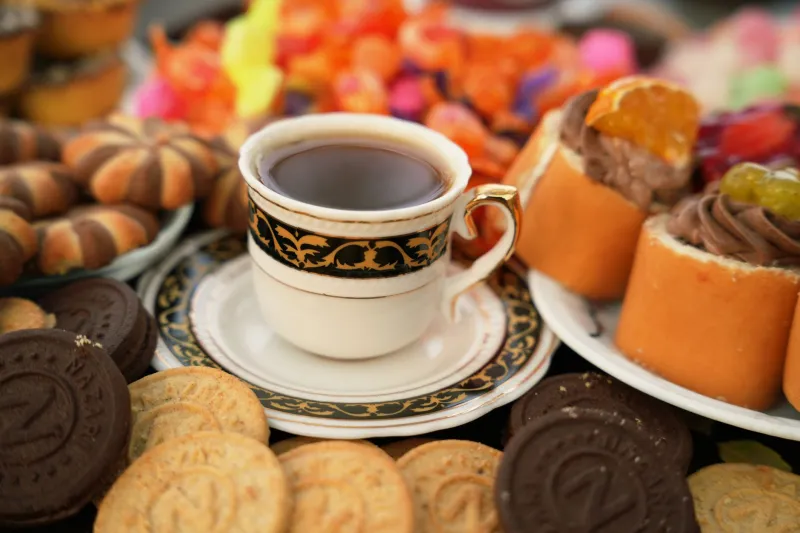
At Household No. 6, we do not simply eat biscuits. We operate a small, crumb-based constitutional monarchy. There is a tin for us, a tin for them, and a set of unwritten rules so deeply felt that breaking them can clear a kitchen faster than a mention of the energy bill.
This is not greed. It is governance. And like all governments, it is held together by tradition, mutual suspicion, and the faint hope that nobody will notice the last chocolate digestive has gone.
The Two-Chamber Biscuit Parliament
The biscuit system at No. 6 is bicameral. In the lower chamber sits the Everyday Tin: a battered, slightly dented cylinder that lives by the kettle and contains the working biscuits. Rich Tea, Bourbon, the occasional Hobnob, and whatever was on offer at Tesco when someone did the big shop. These are biscuits for Tuesdays. Biscuits for waiting for the washing machine to finish. Biscuits for pretending you are only having one.
The upper chamber is the Guest Tin. It is kept on a higher shelf, partly for storage and partly for moral altitude. Inside are the good shortbread, the chocolate-coated things, and a Custard Cream so pristine it appears to have been placed there by a curator. The Guest Tin is not for guests, exactly. It is for the idea of guests. It is a diplomatic gesture in biscuit form, a small statement that this household could, if required, host a vicar.
Between the two tins runs a border patrolled by memory. Everyone knows the Guest Tin exists. Everyone knows where it is. Everyone knows that opening it on a Wednesday afternoon because the Everyday Tin has failed is technically possible but constitutionally unforgivable.
The Everyday Tin: A Republic of Crumbs
The Everyday Tin is where democracy gets messy. Its contents are subject to supply chains, mood, and whether anyone remembered to put biscuits on the list. When it is full, it is a source of quiet national pride. When it is empty, it is a monument to poor planning and the phrase 'I thought you bought some'.
There is a hierarchy within the tin itself. The Custard Cream is the reliable backbencher: always there, rarely exciting, fundamentally sound. The Bourbon is the opposition: chocolatey, slightly divisive, capable of leaving crumbs in the keyboard. The Rich Tea is the civil servant of the biscuit world, doing unglamorous work without complaint. The Hobnob is the heavy machinery. It is not a biscuit to be rushed, and it is certainly not a biscuit to be dunked carelessly unless you enjoy tea with a side of sediment.
And then there is the chocolate digestive, the chancellor of the Everyday Tin. It holds the purse strings of household morale. When one remains, it is not simply a biscuit. It is a test of character.
The Guest Tin: Diplomacy in a Tin
The Guest Tin has a different atmosphere. Its contents are not everyday items. They are provisions for a better version of ourselves: the version that dusts before visitors arrive and owns a matching set of teaspoons. Opening the Guest Tin without a stated occasion is like getting the good china out for beans on toast. Technically allowed. Spiritually alarming.
The good shortbread is the most sensitive item in the entire arrangement. It is thick, buttery, and wrapped in a paper frill that suggests it has been on holiday. It is not for dunking. It is not for 'just a quick one'. It is for guests who arrive at the door with shoes that look intentional.
This creates a fragile peace. The Everyday Tin absorbs daily demand. The Guest Tin absorbs hope. And the household lives in the gap between the two, politely ignoring the fact that the Guest Tin has been at half capacity since roughly 2019.
Schedule 4: The Dunking Protocols
Dunking at No. 6 is governed by custom rather than legislation, but the customs are strict enough to feel legal.
A Rich Tea may be dunked for two seconds. It is a biscuit that requires confidence but rewards caution. A Bourbon may be dunked, though the chocolate makes it a high-risk manoeuvre, and anyone who loses half of it into the mug must fish it out with a teaspoon and accept the shame.
A chocolate digestive is a no-dunk zone by common consent. It is already carrying enough. Introducing tea is simply asking for structural failure.
The Custard Cream occupies the middle ground. It can be dunked, but it must be done with respect for the custard. There is a correct angle, a correct speed, and a correct amount of tea absorbed. Get it wrong and you are left with a biscuit that has become a small, sad sponge. Get it right and you understand why this country has survived so much.
The Shortbread Incident
No account of the biscuit hierarchy would be complete without The Shortbread Incident. It happened on a Sunday, which is when most domestic crimes occur, because everyone is at home and the kettle is on.
A member of the household, who shall remain unnamed for legal and familial reasons, took a piece of the good shortbread from the Guest Tin. Not for a guest. Not for a special occasion. For a Sunday afternoon that had, in their defence, become slightly boring.
The crime was discovered by the paper frill on the kitchen counter. The accused argued that the shortbread had been 'looking at them'. The prosecution argued that this was not how biscuits worked. The defence then said the shortbread was 'probably going stale anyway', which was a bold claim about a biscuit that had been in the tin for three weeks.
The matter was resolved with a stern cup of tea and an agreement that the Guest Tin would be left alone until at least the next bank holiday. Peace was restored. Trust, however, had suffered a small fracture, as it always does when the good shortbread is treated like an everyday Hobnob.
The Empty Packet Betrayal
If the shortbread incident was a diplomatic crisis, the empty packet is the quiet treachery that eats at the soul of the household. You go to the cupboard. You see the biscuit packet. You feel hope. You pick it up. It is light. It is folded over. It is empty.
Someone has put the empty packet back.
This is not a mistake. It is a message. It says: I have eaten the last one, and I would like you to experience the same brief, bitter moment of expectation I felt when I opened it. It is the domestic equivalent of leaving a country without a note.
The empty packet is now a recognised offence at No. 6. The penalty is not severe, because we are British and we prefer sighing to sentencing. But it is noted. It is remembered. And it is brought up at Christmas.
The Last Chocolate Digestive
The last chocolate digestive is the most contested object in the house. It sits in the Everyday Tin like a tiny, chocolatey crown. Everyone knows it is there. Nobody wants to be the one who takes it. But nobody wants to be the one who is left with the guilt of not taking it either.
This is the paradox at the heart of the Household No. 6 biscuit hierarchy. We operate a two-tier system not because we are cruel, but because we are hopeful. The Guest Tin exists because we might one day have guests. The Everyday Tin exists because we might one day need a biscuit before they arrive.
And the last chocolate digestive exists to remind us that even in a well-run household, peace is temporary. The tin will be full again. The guests may come. But someone, eventually, will put the empty packet back in the cupboard, and the whole constitutional arrangement will have to be renegotiated over a brew.