Somewhere Safe, Nowhere Found: Inside Household No. 6's Lost Property Bureau
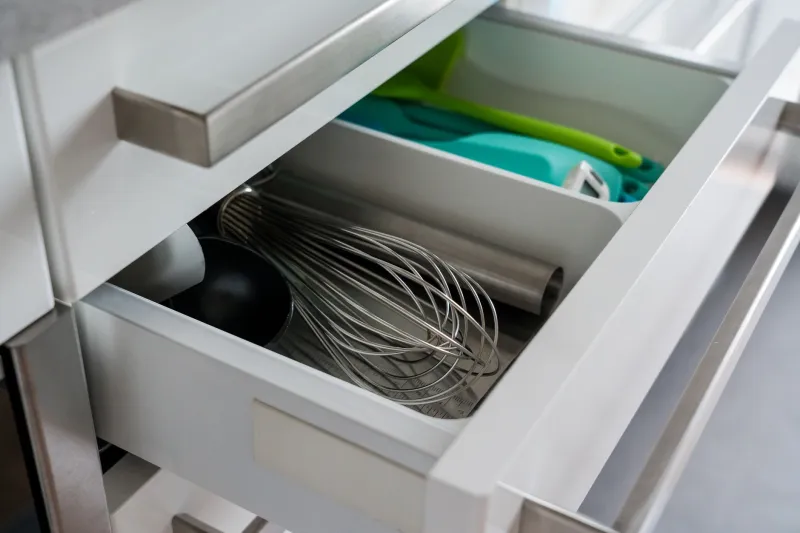
There is a sentence in this house that causes more chaos than 'we'll sort it after Christmas' and more silent panic than the boiler making that noise again. It is: 'I've put it somewhere safe.'
On paper, it sounds responsible. Prudent, even. The sort of thing a person with a labelled filing system and matching Tupperware lids might say. In practice, it is a domestic curse wrapped in good intentions. The moment an item is declared safe, it enters a witness protection programme run by a committee of coat pockets, unlit cupboards and drawers that seemed sensible at the time.
Welcome to the Lost Property Bureau of Household No. 6. We do not have opening hours. We do not have a counter. We do, however, have a growing collection of items that are technically 'around somewhere' and a household-wide habit of patting the same kitchen shelf as if it might eventually confess.
The doctrine of the safe place
The safe place is not a location. It is a mood. It is a fleeting sense of organisation that strikes during a Sunday afternoon tidy-up, usually while holding something vital and thinking, 'I mustn't lose this.'
And so the passports go into 'the important folder', which is behind the good plates, which are in the cupboard we only open when someone visits. The spare key goes into the coat pocket of the coat nobody has worn since a particularly optimistic barbecue in 2019. The warranty card for the kettle is filed carefully under 'appliances', except the file is actually a takeaway menu, and the menu is actually in a bag of other menus.
Each decision is logical for approximately four seconds. Then the memory closes the tab, and the item becomes part of the household's informal lost property archive.
Case files from the bureau
Case 001: The passports. Last seen during a clear-out that began with the words, 'We should really keep all this together.' They were not kept together. They were separated, wrapped in a sense of purpose, and posted into a biscuit tin that was later moved because it was 'cluttering the side'. The airport search remains one of the great dramatic performances of our time.
Case 014: The back-door spare key. Placed in a safe place after a minor lock-out incident. The safe place was described, at the time, as 'obvious'. It was not obvious. It was inside a gardening glove, inside a trug, behind a bag of compost. We found it eighteen months later while looking for secateurs.
Case 027: The kettle warranty card. Filed under 'household admin', a phrase that sounds reassuring and means absolutely nothing. The card was eventually found in a bedside drawer alongside a takeaway menu, two hair bobbles and a receipt for something we no longer own.
Case 038: The birthday card for Auntie Margaret. Bought in January. Hidden in March. Discovered in November, by which point it had become less a card and more an archaeological exhibit. It was a lovely card. It simply arrived at the wrong end of the year.
The anatomy of a safe place
After extensive fieldwork, we can confirm that safe places share several features. They are hidden from burglars, but also from us. They are near other important things, which means they are near nothing identifiable. They are often horizontal surfaces, because putting something down is the fastest route to losing it forever.
There is the Confident Drawer, which is opened regularly but never fully emptied. There is the Coat Pocket Vault, a place of no return until laundry day. There is the Bag Within a Bag, where receipts multiply and lip balms go to die. There is the Shelf That Seems Official, usually high up and just out of sight. And there is the Tin of Mystery, which contains batteries, buttons and one photograph of someone we think is a cousin.
The Lost Property Bureau does not judge. It simply catalogues.
Retrieval protocols for the panicking householder
- Stop patting the same shelf. It has told you everything it knows.
- Reconstruct the last known sighting. Ask the household, but not all at once, because everyone will say, 'Have you looked in the drawer?' without specifying which drawer.
- Search by category, not by name. Passports live near travel adapters. Spare keys live near shoes. Warranty cards live near instruction manuals nobody has ever read.
- Empty the receptacle completely. Rummaging is just hope with fingers.
- Check the coat you have not worn since before the pandemic. Then check the bag inside the coat. Then check the pocket of the bag.
- Use a torch. Safe places are dark, because apparently safety requires poor lighting.
- When you find the item, do not put it back somewhere safe. Put it somewhere boring and tell one other person. Boring is the enemy of mystery.
The official safe place, singular
The bureau's main recommendation is radical: have one safe place. Not four. Not 'the usual spot' and also 'the other usual spot'. One box. One shelf. One label. A label that says something useful, such as 'Passports and Documents', rather than 'Bits'.
It also helps to photograph the safe place, because the version of you who hid the item is not the same version of you who needs it at 7.40am on a Tuesday. And ban the phrase 'somewhere safe' from household vocabulary. Replace it with a full address. 'In the blue box on the top shelf of the wardrobe' is less poetic, but it has the advantage of being findable.
Verdict of the audit
No item in this house is truly lost. It has simply been promoted to a location too secure for its own good. The safe place is not a place at all. It is an idea, a brief flicker of domestic optimism, and it is currently in the kitchen somewhere.
If you need us, we will be by the drawer, patting.