Stacked Against Us: A Field Study in Dishwasher Doctrine at Household No. 6
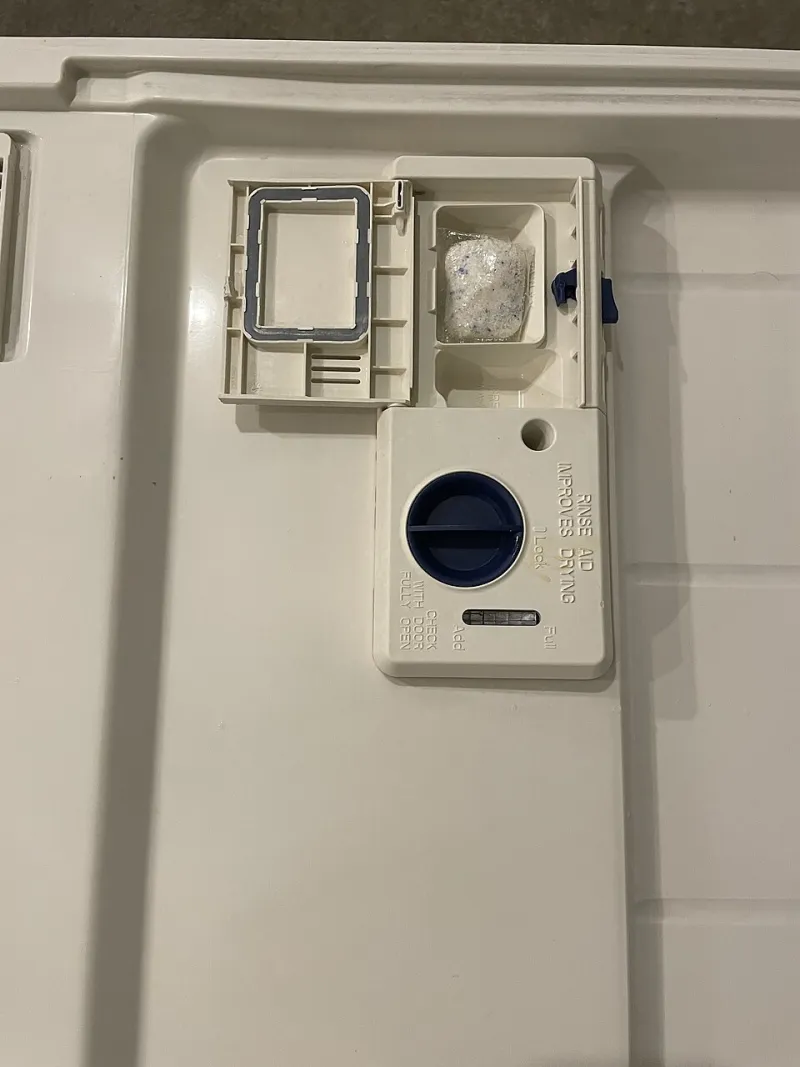
Photo: SelenaJKruse, CC BY-SA 4.0, via Wikimedia Commons
Somewhere between the kettle and the bin, the dishwasher became the most politically charged appliance in Britain. At Household No. 6, loading it is not a chore. It is a worldview, a personality test, and — on at least one occasion in early November — the reason the good knives were briefly hidden.
This is the report of a three-week field study into the dishwashing habits of four people, one dog, and a mid-range Bosch that hums like a disappointed aunt. It is not peer-reviewed. It has, however, been peer-argued about extensively.
Methodology: Clipboards, Stopwatches, and a Disapproving Face
Over 21 days we observed 42 cycles, logging every placement, sigh, and muttered accusation on a clipboard that was itself nearly loaded into the machine by mistake. The sample comprised four humans: myself (The Architect), my partner (The Tetris Optimiser), our teenager (The Chaos Agent), and a visiting grandparent (The Pre-Rinser). The dog observed from a safe distance, contributing nothing but judgement.
For each cycle we recorded loading time, rearrangement time, the number of items subsequently re-washed by hand, and the volume of the phrase 'who put this here?' spoken within a three-metre radius.
The Four Loading Schools
The Architect. Bowls on the bottom. Cups on the top. Cutlery sorted by type, tines down, in a configuration that respects both hygiene and negative space. Believes the dishwasher is a system to be understood, not a bin with ambitions. Loading time: four minutes twelve seconds. Unloading satisfaction: high.
The Tetris Optimiser. Approaches the rack as a geometry puzzle. Will wedge a colander into a corner if the shape fits, then declare victory. Frequently uses the phrase 'it'll be fine'. Loading time: two minutes one second. Items re-washed afterwards: 3.6 per cycle, mostly the colander.
The Chaos Agent. Treats the dishwasher as performance art. Cups go in handle-down. A frying pan goes on the top rack. A fork ends up in the knife slot, which is technically the appliance equivalent of putting a cat in a toaster. Loading time: eleven seconds, because leaving is part of the technique.
The Pre-Rinser. Washes everything before washing it, in the sink, by hand, at length, while explaining that dishwashers are 'not as good as they used to be'. Loading time: eighteen minutes and one cup of tea. Water saved: none. Sense of moral superiority: total.
Exhibit A: The Mug Jacuzzi
Of all the offences, the handle-down cup is the most contested. Placed upside down but with its handle wedged against the rack, it forms a small pond — a mug jacuzzi — that resists the spray arm and collects a teaspoon of grey water. The Architect views this as a design flaw. The Chaos Agent views it as a lifestyle. The Pre-Rinser views it as proof that nothing works properly anymore.
Figure 1, reproduced from the clipboard:
TOP RACK:   [cup, handle-down] [cup, handle-down] [unknown lid]
BOTTOM:     [pan] [plate] [plate] [fork, pointing up]
RESULT:     one clean plate, one mug jacuzzi, one mystery lid
Findings: The Efficiency Paradox
The data produced a result we have called the Efficiency Paradox: the fastest loader is consistently the slowest unloader, because everything must be inspected, sighed over, and re-washed. The Chaos Agent's eleven-second load yielded an average of four hand-washes, two cross words, and one fork-related near-miss involving the bread knife.
Audible sighs per cycle: 6.4. Utterances of 'who put this here?': 3.1. Occasions on which someone opened the door mid-cycle to add a single teaspoon: nine. Occasions on which that teaspoon was clean: zero.
Testimony From the Kitchen Floor
The Architect: 'It is a dishwasher, not a gallery. There is a right way.'
The Tetris Optimiser: 'I am not rearranging your art project at ten o'clock at night.'
The Chaos Agent: 'The cup was already like that.'
The Pre-Rinser: 'If you want it done properly, do it yourself. But then we will all watch.'
The Dishwasher Charter (Draft 7)
After the third emergency summit, the household drafted a charter. It lasted thirty-six hours.
- Handles down, except the one that is not, which is to be discussed calmly.
- No pans on the top rack. No exceptions, Kevin. (Kevin is the colander.)
- Pre-rinsing is permitted only as a private ritual, not as a lecture.
- Whoever loads does not unload. (This clause was struck out after one day, on the grounds that it was 'not how families work'.)
- All disputes to be settled by rock-paper-scissors, best of three, before the first cup goes in.
By Saturday afternoon, someone had placed a mug handle-down, a pan on the top rack, and a mystery lid in the cutlery basket. The charter was last seen behind the bread bin.
Conclusion: Living With the Jacuzzi
The study's central finding is not that one method is superior. It is that a household can survive a great many things, including a mug jacuzzi, provided nobody mentions the colander. Compatibility, it turns out, is not agreement. It is the willingness to re-wash a plate in silence and put the kettle on anyway.
Next week: the tea towel inquiry, in which we ask why there are eleven and where they all go.