Case Files From the Sink: A Genealogical Inquiry Into Our Suspiciously Large Sponge Family
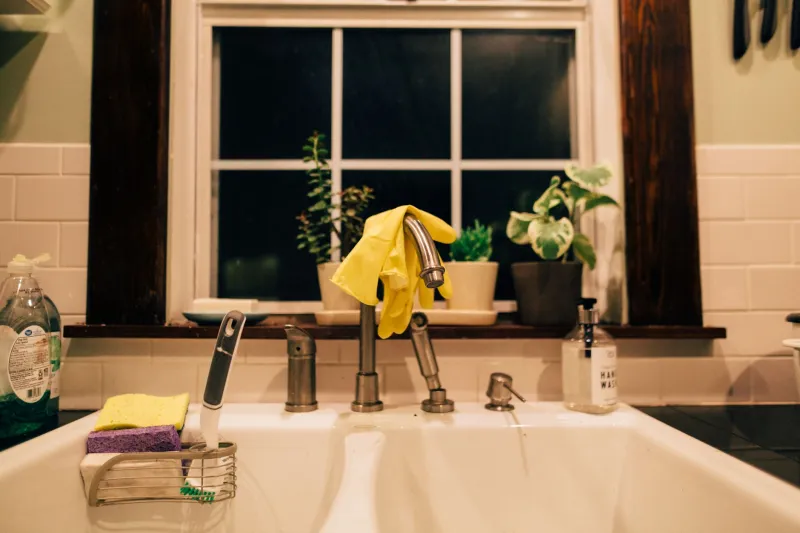
There are eleven sponges in this house. I counted twice, because the first time I assumed grief had distorted my judgement. Eleven. For a household of four people and one bathroom. Somewhere between the last census and Tuesday, the sponge population of Household No. 6 achieved majority rule.
Naturally, I did what any reasonable adult would do: I put the kettle on, sat down with a clipboard, and conducted a full genealogical investigation. What follows are the findings. Names have been changed to protect the soggy.
The Matriarch: Bathroom-Only Since the Blair Years
Every collection has an elder stateswoman, and ours is a grey-yellow scrubbing pad who has resided exclusively in the upstairs bathroom since approximately 2009. She has one job — the sink wipe-down — and she performs it with the weary dignity of a woman who has seen things. Toothpaste archaeology. A Barbie shoe. The mysterious blue residue that defies all known cleaning chemistry.
She claims she's 'fine, honestly' and 'doesn't want to be any trouble.' She is, in fact, a biohazard with seniority. I have scheduled her retirement. She does not know yet.
The Twins: Dish Soap Companions, Born of a Supermarket Multi-Buy
Then there are the pair at the kitchen sink, wedged either side of the tap like bookends of despair. They arrived together in a three-for-two deal from the Co-op, and they have been inseparable ever since — mainly because one of them is doing all the work while the other one has somehow stayed suspiciously pristine, raising serious questions about who exactly is washing the pans.
The pristine one insists it's 'earned its position.' The mangled one has filed no formal complaint but has stopped making eye contact.
The One Who Claims Special Occasions
Behind the tap lives a scrubbing sponge in a festive red casing that has not touched a single surface since the Christmas of a particularly ambitious Yorkshire pudding. It is, we are told, 'for the good pan' — the cast iron one that requires a gentle touch and, apparently, a sponge that has spent so long in storage it has developed its own microclimate.
This sponge has never worked a day in its life. It is the aristocracy of the sink. And like all aristocracy, it survives purely on the strength of its origin story.
The Mystery Lodger
Finally: a sponge in the utility room that nobody will claim. Not me, not my other half, not the children, not even the dog, who has notably fewer scruples. It simply appeared, the way sponges do, as if the house itself grew one. It is damp in a way that suggests it has secrets. It has been placed under review.
The Intervention: When to Actually Retire a Sponge
Right, the serious bit, because somebody has to say it and apparently it's me, the person who just wrote 600 words of sponge genealogy.
A sponge is not a family heirloom. It is not a pet. It is a disposable cleaning implement with a lifespan measured in weeks, not parliamentary terms. The honest guidance:
- Replace kitchen sponges every one to two weeks, or sooner if they smell. If a sponge has an odour when it's supposed to be the thing removing odours, it has failed at its one job.
- Microwave a damp sponge for a minute or pop it in the dishwasher to keep it going a few extra days — but this buys time, not immortality.
- Never, ever cross-contaminate. The bathroom sponge stays in the bathroom. The dish sponge stays with the dishes. The festive one goes in the bin with the mince pies.
- If in doubt, throw it out. Sponges cost less than a first-class stamp. You are not a monster for binning one.
The Matriarch will be retiring this weekend, with full honours, straight into the outside bin rather than the kitchen one, because even legends deserve a dignified exit. The rest of the family will be monitored. The Mystery Lodger has until Friday to explain itself.
Household No. 6: eleven sponges down, a sensible number pending. Wish us luck.