Blunt Force Policy: The Secret Constitution Governing Our Household Scissors
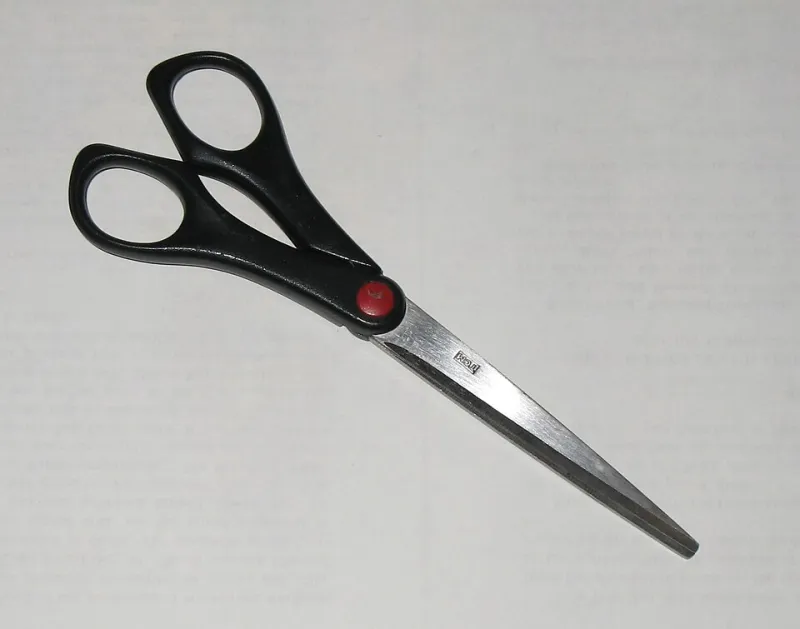
Photo: BGN-WMCO, CC BY 2.5, via Wikimedia Commons
At Household No. 6, there is a drawer. You know the one. It sticks slightly, contains three takeaway menus, a corkscrew nobody can find, and the Good Scissors. The Good Scissors are not merely a cutting implement. They are a constitutional monarchy, and Dad is the monarch.
This inquiry was prompted by a routine audit of the kitchen drawer, conducted after a minor incident involving a birthday present and a length of ribbon. The findings were troubling. The Good Scissors had been moved two inches to the left. A full household inquiry was therefore convened, with tea and a plate of custard creams.
The Hierarchy of Blades
Household No. 6 operates a strict five-tier scissors system, though nobody remembers voting for it. At the top sit the Good Scissors: black-handled, kitchen-drawer-resident, reserved for food packaging, chicken string, and Dad's occasional DIY emergencies. They are sharp, oiled, and treated with the reverence normally reserved for a family heirloom.
Beneath them are the Craft Scissors, pink and hidden somewhere in the back of a cupboard, used exclusively for wrapping paper and the occasional school project. Then come the Nail Scissors, which are tiny, useless, and best ignored. Then the Shed Scissors: rusty, stiff, and rumoured to be blunt on purpose. At the very bottom of the pile, there is a single pair of children's safety scissors with a plastic orange handle, which are not so much a tool as a threat to cardboard everywhere.
The Borrowing Ceremony
Requesting the Good Scissors is not a simple transaction. It is a ceremony. First, the applicant must locate Dad, who is usually in the shed or pretending to be in the shed. Second, the applicant must state a reason that meets the threshold of 'genuine need'. Third, the applicant must accept a lecture on blade care, which may include the phrase 'they're not for paper, they're not for tape, and they're certainly not for opening parcels'.
A successful application results in a temporary licence to use the scissors, typically for no more than ninety seconds. The scissors must then be returned to the drawer, wiped clean, and placed blade-down. Failure to comply results in a verbal warning and, in extreme cases, a note on the fridge.
The most common violation is the phrase 'I'll just use them quickly'. This is the domestic equivalent of saying 'I'll only stay for one'. It never ends well.
Case Study: The Wrapping Paper Incident
Last December, a member of the household—who shall remain nameless, but whose initials are 'everyone except Dad'—used the Good Scissors on wrapping paper. The paper had a metallic finish. The scissors developed a sticky residue. Dad's response was calm, measured, and entirely disproportionate.
He held a forensic examination under the kitchen spotlight, produced a magnifying glass from somewhere, and announced that the blades had been 'compromised'. The scissors were confiscated for forty-eight hours. A replacement pair of Shed Scissors was issued for the duration, with the instruction that 'if you can cut with these, you don't need the good ones'. Nobody could cut with them. That was the point.
The Decoy Doctrine
The Shed Scissors deserve their own paragraph. They are blunt, they are stiff, and they have been left in the shed for a reason. They are decoys. Their purpose is to test whether a borrower truly needs to cut something, or whether they are simply too lazy to walk to the kitchen drawer.
If you find yourself sawing at a piece of string with a pair of scissors that feel like they've been used to prune a hedge, you have failed the test. Return to the house. Reconsider your life choices. Ask Dad nicely.
Official Rules (Extract From the Constitution)
- The Good Scissors are for Dad. Dad is defined as the person who last sharpened them. This is a self-renewing office.
- Any request to borrow the Good Scissors must be made in person. A note on the fridge is not a formal application.
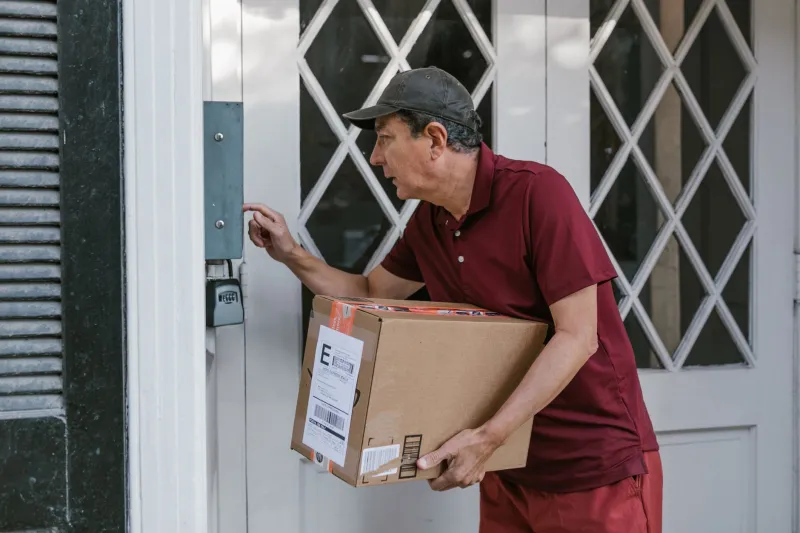
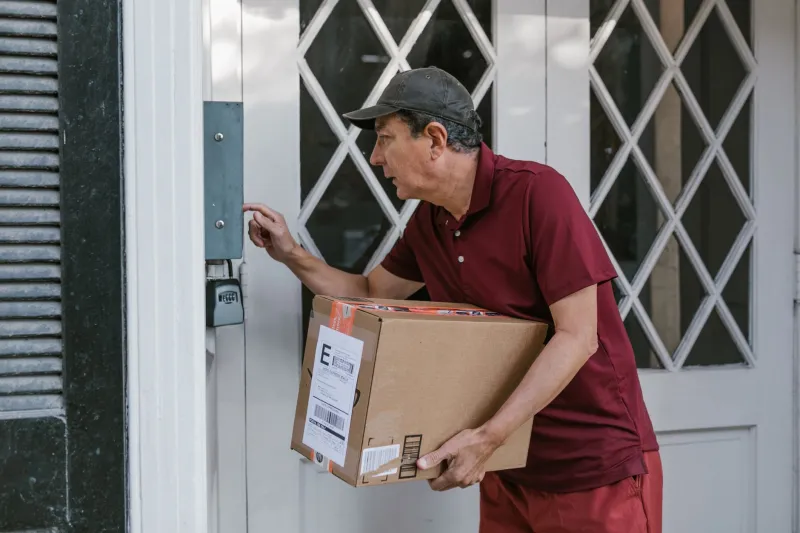
- The Good Scissors may not be used to open Amazon parcels. Use the key. The key is right there. Look.
- If the scissors go missing, the last person to say 'I haven't seen them' is considered culpable until proven innocent.
- Under no circumstances are the Good Scissors to be taken into the garden. The garden has its own scissors. The garden scissors are terrible. That is not an excuse.
The Disappearance Protocol
When the Good Scissors vanish—and they will—the household follows a strict search sequence. First, the drawer. Second, the dishwasher, despite nobody ever putting them there. Third, under the sofa cushions. Fourth, the shed, where Dad will insist they are not. Fifth, a child's bedroom, where they will be found under a pile of coloured paper and guilt.
The protocol concludes with a family meeting, a reminder of the rules, and a vague threat to buy a lock for the drawer. The lock is never bought. The scissors are never safe. This is the cycle of life at Household No. 6.
Conclusion
The Good Scissors are more than a tool. They are a symbol of domestic order, a test of character, and a reliable source of low-level marital tension. Treat them with respect. Return them promptly. And if you ever find yourself reaching for them without asking, remember the constitution. Remember the wrapping paper. Remember Dad's magnifying glass.
Then walk to the shed and use the blunt ones. It builds character.