Thirty Days, Forty-Two Loads: My Field Notes From the Slopes of Laundry Mountain
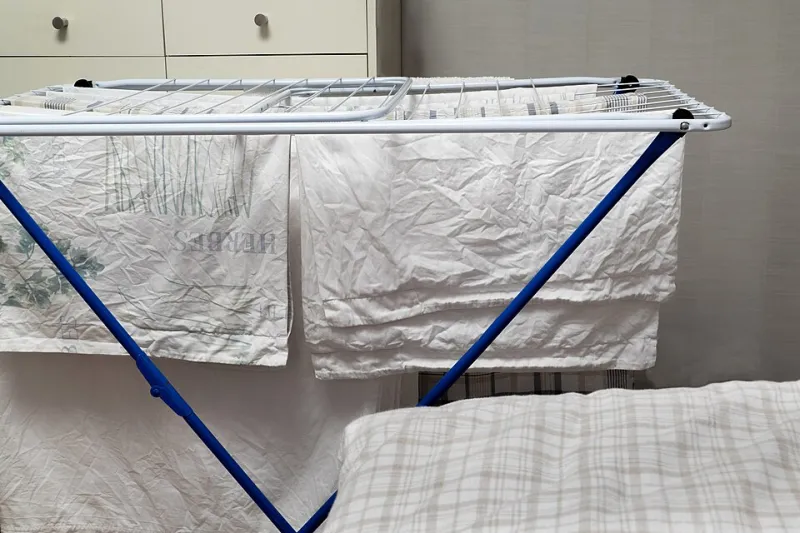
Photo: W.carter, CC BY-SA 4.0, via Wikimedia Commons
Some people keep journals. I kept a spreadsheet. For thirty days, I documented every load of laundry that passed through Household No. 6, because I wanted data, and because I suspected the truth was worse than I imagined. It was. Forty-two loads. I repeat: forty-two. There are four of us. One of us is nine and changes clothes as a hobby.
What follows is my field report, plus — because I refuse to have suffered for nothing — some genuinely useful tips for surviving the Great British Drying Dilemma without your energy bill requiring its own support group.
Week One: Optimism
The month began with the best of intentions. I sorted by colour. I checked labels. I even used a delicates bag, which I'd previously believed was decorative. The washing line saw two glorious days of February sunshine before the rain returned, as it always does, like an ex with a key.
Week Two: The Sock Dimension Confirmed
By day eleven I had six single socks and zero explanations. I checked the drum. I checked behind the drum. I checked the space between worlds, where I'm fairly sure all our missing socks live comfortably and judged us. Meanwhile, my son's school PE kit entered a cycle of perpetual dampness — washed Monday, still wet Wednesday, worn 'a bit pongy' Thursday. That kit has not been fully dry since approximately 2023.
Week Three: The Cost-of-Living Reckoning
Then I opened the energy app and made a noise the dog found concerning. Tumble dryers are among the most energy-hungry appliances in the home — a typical vented dryer can cost well over £1.50 per cycle on current tariffs, and I'd been using mine like it was free. It was not free. It was £4.50 a week to avoid a drying rack.
So I changed tactics, and here's what actually worked:
- The dehumidifier trick. A decent dehumidifier (a 300ml-per-day model is fine for most homes) in a closed room with a drying rack dries clothes overnight for pennies — roughly 10–20p per run versus £1.50+ for the dryer. Bonus: it stops the windows dripping with condensation, which in a damp British winter is half the battle.
- Spin it harder. An extra spin cycle adds minutes to the wash but removes a shocking amount of water, slashing drying time. Costs pence. Genuinely the best 15p I spend each week.
- Eco cycles are not a scam. I was sceptical — how can longer use less energy? But eco settings heat water far more gradually and use less of it. Our bills dropped noticeably once I stopped defaulting to a 40-minute blast.
- Wash at 30. Unless something has encountered actual mud (it has; see: PE kit), 30°C cleans fine with modern detergent.
- Rack placement matters. Near a radiator is tempting, but draping clothes on the radiator wastes heat and dampens the air. Place the rack near it, crack a window, and let the dehumidifier do the heavy lifting.
- Retire the dryer to emergencies only. School uniform crisis at 7am? Fine. Everything else? The rack is your friend now.
Week Four: Acceptance
By the final week, I'd stopped fighting the mountain and started negotiating with it. A load a day, dried overnight on the rack, folded (mostly) the same evening. The laundry didn't shrink. But my dread did, and the energy bill fell by about £14 across the month — enough for a takeaway, which is the only currency that matters.
The Seven Stages of Laundry Grief
- Denial — 'I'll do it all on Sunday.'
- Anger — Finding a wet load you forgot in the machine two days ago.
- Bargaining — 'If the kids sort the socks, I'll fold.' They will not sort the socks.
- Depression — Sitting on the bedroom floor atop a basket of clean laundry you cannot face.
- The Sniff Test — Is it clean? Is it clean enough? Science says maybe.
- Acceptance — The mountain never shrinks. You merely learn to live at altitude.
- Transcendence — You buy the eleventh pack of school socks so no matching is ever required again. You are free.
The spreadsheet is closed. The socks remain missing. The PE kit is, at time of writing, damp. But the dehumidifier hums on, the bill is lower, and I know — with data — that I was right all along: this household runs on laundry, chaos, and a machine that eats socks for sport.