The Bathroom Cabinet Dispensary: A Clinical Audit of Household Hope
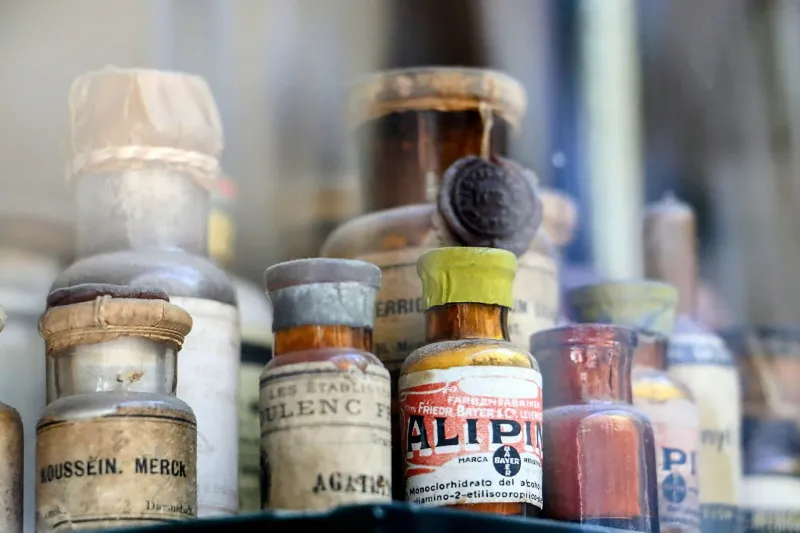
At Household No. 6, the bathroom cabinet is not really a medicine cupboard. It is a small, hinged museum of minor ailments, half-remembered advice and optimistic shopping. Every household has one: the shelf where Calpol goes to retire, where plasters lose their will to stick, and where a single mysterious syringe lurks like a plot point in a medical drama nobody commissioned.
Last weekend I opened ours with a torch, a notebook and the sort of confidence usually reserved for people who own label makers. What follows is a clinical audit of sorts - not of the family's health, which remains broadly fine and occasionally dramatic, but of the cabinet's contents. It is a pharmacological record of every cough, scrape and suspicious rash that has passed through this house since roughly the time the toaster was new.
Method and Terms of Engagement
The audit was conducted on a Sunday afternoon, because Sunday afternoon is when households like ours decide to confront the small horrors behind cupboard doors. I removed every item, laid them on a towel and arranged them by category: potions, creams, sharps, sticking things, and objects that defied classification.
The rules were simple. Anything with a date earlier than the current decade was to be photographed, noted and treated with respect. Anything that rattled was to be opened only at arm's length. Anything with a child-friendly cartoon character on the label was to be examined for nostalgia before being placed in the bag marked 'discuss with a responsible adult'. That bag is still in the hallway. Nobody in this house has yet been mistaken for a responsible adult.
Exhibit A: The Calpol Vault
The first discovery was a bottle of Calpol, the family equivalent of a holy relic. It had a use-by date from the previous decade, a sticky neck and the faded confidence of a bottle that once solved everything from teething to Tuesday. There was also a second bottle behind it, half-full, unlabelled and of uncertain vintage. It may have been Calpol. It may have been something for the dog. The dog has been gone since 2018, which does not narrow it down.
This is the central tragedy of the bathroom cabinet: it preserves hope long after hope has expired. Every parent knows the 3am logic. A child has a temperature, the shops are shut, and the bottle in the cabinet is probably fine. It is not fine. It is a museum piece. But throwing it away feels like admitting that the emergency is over, and that next time we will have to buy a fresh one like organised people.
Exhibit B: The Plaster Shortage
The plasters were kept in a small tin that had clearly been through a difficult period. There were four plasters in total. Three had lost their adhesive. The fourth had lost its wrapper and most of its dignity. None were the size required for an actual injury, which is the unwritten law of plasters: the only available plaster is always shaped for a paper cut on a doll's finger.
We also found a roll of medical tape, a packet of gauze and a plaster that appeared to be from a hotel first-aid kit in 2017. The plaster was still in its wrapper, which felt like a small victory until I realised the wrapper had fused to the plaster. It is now less a dressing and more a laminated reminder of a weekend break.
The plaster shortage is not about supply. It is about distribution. Plasters migrate. They leave the tin, attach themselves to socks, disappear into drawers and reappear years later under the spare bed. No household ever has the right plaster at the right moment. This is not incompetence. It is physics.
Exhibit C: The Syringe Question
Every bathroom cabinet contains at least one syringe and nobody knows why. Ours is plastic, unopened and has been there so long that it has become part of the cabinet's identity. It might have come with a bottle of Calpol. It might have come with a thermometer. It might have arrived by post in a moment of parental efficiency that has never been repeated.
I did not investigate too closely. Some objects in the bathroom cabinet are best left as abstract concepts. The syringe is one. The other is a small brown bottle with a handwritten label that says 'ear' and nothing else. Ear what? Ear drops? Ear wax? Ear emergency? We may never know, and that is probably for the best.
The Supporting Cast: Sudocrem, Vicks and Mystery Drops
No audit would be complete without the supporting cast. There was a tub of Sudocrem with a fingerprint in it, a jar of Vicks VapoRub that has outlived two winters and a bottle of cough syrup that had separated into layers, like a science experiment with a chesty cough.
Then came the mystery drops. There were three bottles. One was for eyes, one was for ears and one was for something the label described as 'external use only'. None had a date. All had been opened. Two were half-empty. One was completely empty, which somehow felt more suspicious than the others.
The Running Tally
Here is the tally, as promised. Items technically older than the downstairs toaster: four. Items older than the microwave: six. Items older than the kitchen bin: nine. Items that should have been thrown away before the last general election: eleven. Items I am not prepared to discuss in print: three. Items that made me say 'oh, that's where that went': two.
The oldest item was a small tin of plasters with a price sticker from a chemist that closed years ago. The newest was a packet of painkillers bought during a heatwave and never opened. Together they tell the story of a family that is always either over-prepared or under-prepared, and never quite sure which.
Recommendations and the Likelihood of Compliance
The audit produced a short list of recommendations. Restock plasters. Bin anything expired. Buy a small box for current medicines and keep it separate from the archaeology. Write dates on things. Stop buying Calpol in bulk just because it is on offer.
The likelihood of compliance is low. By next Sunday, the cabinet will have absorbed a new tube of something, a stray plaster and a leaflet about a health condition nobody remembers reading. The cycle will continue. The bathroom cabinet is not a problem to be solved. It is a family archive with a hinge.
Still, there is something comforting about it. Behind the sticky bottles and useless plasters is a record of every small crisis we have muddled through. The cabinet is a mess, but it is our mess. And if you ever need a plaster that will not stick, Household No. 6 has four.